
Habitat suitability mapping for eelgrass and kelp restoration in the northern Salish Sea
Eelgrass and kelp restoration initiatives in BC can fail due to a lack of information available on habitat suitability. Combining the latest information on the environmental requirements, anthropogenic stressors, current and future habitat use, land use tenures, and First Nations cultural interests will help practitioners identify areas most suitable to support eelgrass and kelp habitat.
As part of this project, models will be developed for eelgrass and kelp and made accessible through ArcGIS maps that practitioners can use to identify and prioritize locations for more successful restoration.
Eelgrass
The eelgrass models will build on previous work completed for the Cowichan River estuary, where a habitat suitability model, adapted from Short et. al. (2002): Site-selection model for optimal transplant of Zostera marina in the northeastern US, was developed and used to select suitable eelgrass transplant sites.
Parameters with data suitable for inclusion in this model included sediment, wave exposure, water depth, water quality (i.e. temperature, pH, DO, salinity), current velocity, bed mobility, hydrogen sulfide, active channel classification, and crown land tenures. This model will also incorporate our team’s transplant experience to develop a quantitative site-selection model for additional Strait of Georgia estuaries based on scientific criteria.
Kelp
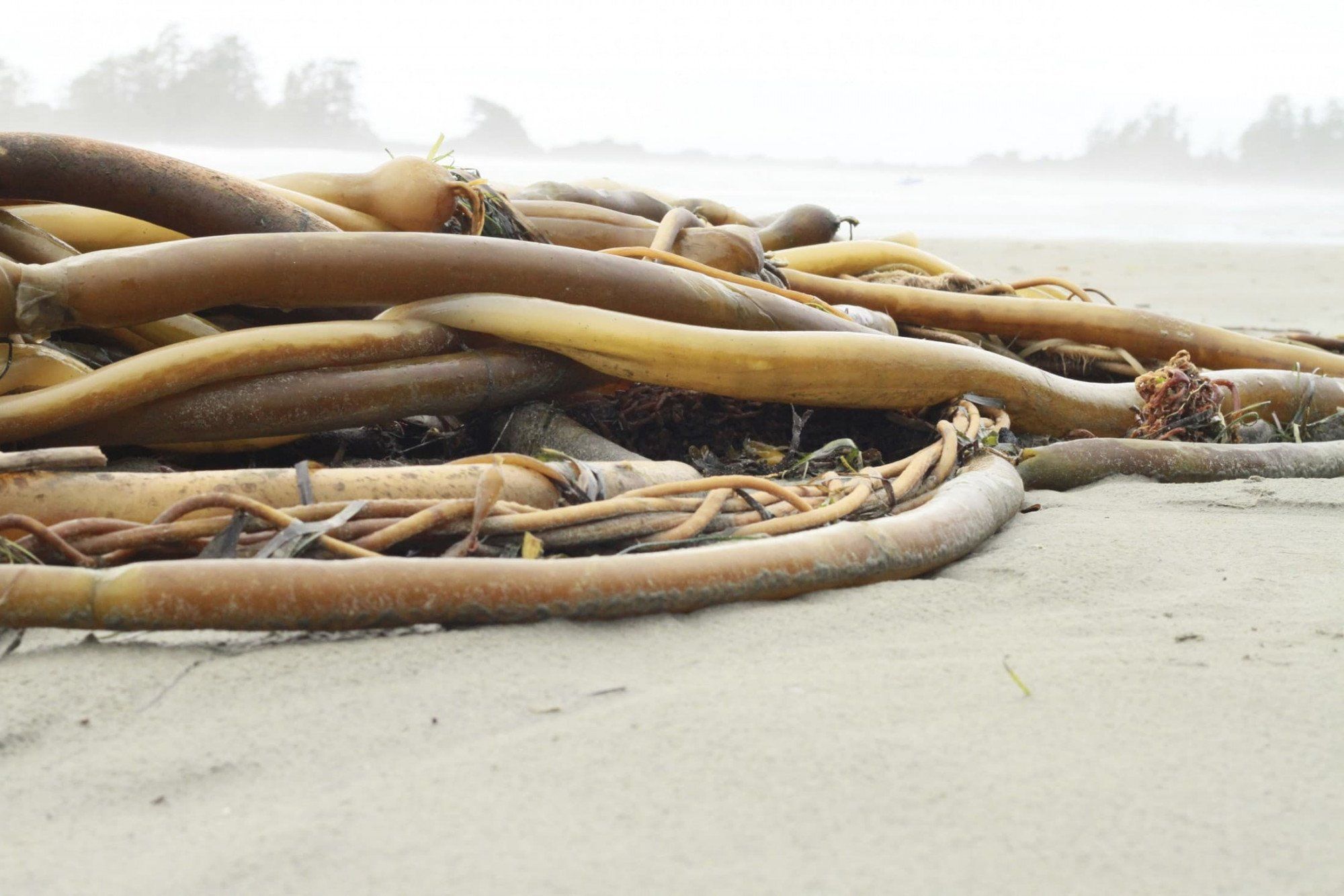
Kelp forests depend on the presence of cold waters, water motion from tides and waves. Other kelp suitability factors included turbidity, salinity, light, and nutrient availability. The kelp model was developed using recent satellite-derived information collated under the University of Victoria Spectral Lab’s Kelp Resiliency Project/Kelp Alliance led by Dr. Maycira Costa, and environmental conditions from the SalishSeaCast numerical ocean model, developed as part of the Salish Sea NEMO Model project, led by Susan Allen in the Department of Earth, Ocean, and Atmospheric Sciences at the University of British Columbia.